What's New



Australia generated $137.9 billion in iron ore export earnings in 2023-24.

Iron ore is essential for the steel used to make buildings, bridges, railways, vehicles, machinery and energy infrastructure.
Australia has around 29 per cent of the world’s iron ore reserves and is the world’s largest iron ore exporter, accounting for around 53 per cent of the global export market in 2024. Australian iron ore exports reached 902 million tonnes that year.
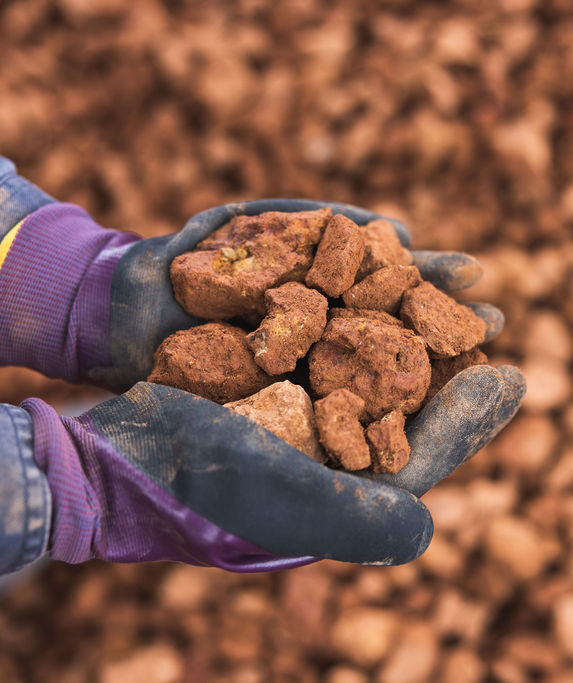
Iron ore is a naturally occurring mineral from which iron can be economically extracted. Its primary use is in the production of steel.
Steel is one of the foundations of modern life. It is used in homes and buildings, bridges and railways, cars and trucks, ships, machinery, energy infrastructure, whitegoods and countless manufactured products.
The Pilbara in Western Australia is the world’s premier iron ore mining hot spot, supported by vast mineral resources and decades of investment in mines, railways, ports, technology and highly efficient supply chains.
Australia’s iron ore industry has developed alongside the industrialisation of some of our most important trading partners.
Pilbara iron ore production began in the 1960s with the development of deposits including Mt Goldsworthy, Tom Price and Mt Whaleback to supply Japan’s rapidly expanding steel industry.
Growth subsequently spread through South Korea and Taiwan before China’s extraordinary industrialisation transformed global iron ore demand this century.
Australian iron ore production grew from just over five million tonnes in 1962 to almost 897 million tonnes in 2024.
This success was not simply the result of Australia possessing abundant iron ore.
Australian miners worked closely with international steelmakers to understand and improve the performance of different ores. Technical innovation helped overcome challenges associated with phosphorus and alumina and unlocked resources that had previously been difficult or uneconomic to use.
The history of Australian iron ore is therefore also a story of innovation, engineering, infrastructure, investment and long-term collaboration between Australian producers and their customers.
Iron ore is central to the Australian economy.
Of Australia’s $137.9 billion of iron ore exports in 2023-24, China was the largest destination, accounting for 84.4 per cent of exports, followed by Japan and the Republic of Korea.
The industry’s contribution extends well beyond exports.
Australian iron ore mining spent around $22.2 billion domestically on intermediate inputs in 2022-23, supporting activity across professional, scientific and technical services, construction, transport, finance, engineering, machinery, maintenance, electricity and other Australian industries.
Global steelmaking is changing, but the world will continue to need enormous quantities of steel and iron ore.
World steel production is projected to rise to around two billion tonnes by 2030. Declining output in China is expected to be offset by new capacity in India, Southeast Asia and the Middle East, together with a modest recovery in North America and Europe.
Steelmaking technology will also evolve as producers work to reduce emissions. New approaches mean Australian producers will continue to innovate and adapt as these technologies develop.
Changes to the global steelmaking fleet, however, occur over decades rather than overnight. Most of the world’s existing iron and steel plants use traditional production technologies and this enormous installed capacity will take time to replace.
Traditional steelmaking – and demand for steelmaking iron ore – will remain important for decades to come.
Australia became the world’s leading iron ore exporter through world-class resources, capital investment, technological innovation, efficient infrastructure, productive workplaces and close relationships with international customers.
Maintaining that advantage requires Australia to remain internationally competitive.
Tax uncertainty, high energy costs, less productive workplace settings and lengthy project approvals all increase the cost and risk of investing in Australian mining. Their cumulative effect can make otherwise attractive projects less competitive against investment opportunities elsewhere.
Stable and competitive policy settings, efficient approvals, reliable and affordable energy and productive workplaces will help ensure Australian iron ore continues generating jobs, investment and export income while supplying the steel that builds the modern world.
Sign up for news, policies, updates and new publications.