Minerals Council of Australia
array(24) { ["ID"]=> int(59) ["id"]=> int(59) ["title"]=> string(13) "mini-mca-logo" ["filename"]=> string(17) "mini-mca-logo.svg" ["filesize"]=> int(11663) ["url"]=> string(68) "https://minerals.org.au/wp-content/uploads/2022/11/mini-mca-logo.svg" ["link"]=> string(38) "https://minerals.org.au/mini-mca-logo/" ["alt"]=> string(0) "" ["author"]=> string(1) "1" ["description"]=> string(0) "" ["caption"]=> string(0) "" ["name"]=> string(13) "mini-mca-logo" ["status"]=> string(7) "inherit" ["uploaded_to"]=> int(0) ["date"]=> string(19) "2022-11-22 08:27:20" ["modified"]=> string(19) "2022-11-22 08:27:20" ["menu_order"]=> int(0) ["mime_type"]=> string(13) "image/svg+xml" ["type"]=> string(5) "image" ["subtype"]=> string(7) "svg+xml" ["icon"]=> string(60) "https://minerals.org.au/wp-includes/images/media/default.png" ["width"]=> int(92) ["height"]=> int(64) ["sizes"]=> array(27) { ["thumbnail"]=> string(68) "https://minerals.org.au/wp-content/uploads/2022/11/mini-mca-logo.svg" ["thumbnail-width"]=> int(150) ["thumbnail-height"]=> int(104) ["medium"]=> string(68) "https://minerals.org.au/wp-content/uploads/2022/11/mini-mca-logo.svg" ["medium-width"]=> int(300) ["medium-height"]=> int(208) ["medium_large"]=> string(68) "https://minerals.org.au/wp-content/uploads/2022/11/mini-mca-logo.svg" ["medium_large-width"]=> int(640) ["medium_large-height"]=> int(444) ["large"]=> string(68) "https://minerals.org.au/wp-content/uploads/2022/11/mini-mca-logo.svg" ["large-width"]=> int(640) ["large-height"]=> int(444) ["1536x1536"]=> string(68) "https://minerals.org.au/wp-content/uploads/2022/11/mini-mca-logo.svg" ["1536x1536-width"]=> int(92) ["1536x1536-height"]=> int(64) ["2048x2048"]=> string(68) "https://minerals.org.au/wp-content/uploads/2022/11/mini-mca-logo.svg" ["2048x2048-width"]=> int(92) ["2048x2048-height"]=> int(64) ["gform-image-choice-sm"]=> string(68) "https://minerals.org.au/wp-content/uploads/2022/11/mini-mca-logo.svg" ["gform-image-choice-sm-width"]=> int(92) ["gform-image-choice-sm-height"]=> int(64) ["gform-image-choice-md"]=> string(68) "https://minerals.org.au/wp-content/uploads/2022/11/mini-mca-logo.svg" ["gform-image-choice-md-width"]=> int(92) ["gform-image-choice-md-height"]=> int(64) ["gform-image-choice-lg"]=> string(68) "https://minerals.org.au/wp-content/uploads/2022/11/mini-mca-logo.svg" ["gform-image-choice-lg-width"]=> int(92) ["gform-image-choice-lg-height"]=> int(64) } }
  • About
    • About the MCA
    • MCA VIC
      • MCA VIC
      • Melbourne Mining Club
      • Members Operating in VIC
      • Victorian Mine Rescue Competition
      • Victorian Women in Resources Awards
    • MCA NT
      • MCA NT
      • Members operating in NT
      • Darwin Mining Club
      • NT Mining Cadets
    • Events
  • Mining Facts
    • Mining Facts
      • Mining Facts
      • Coal
      • Copper
      • Critical Minerals
      • Gold
      • Iron Ore
      • Uranium
  • Membership
    • Membership
    • MCA Members
    • Join
  • Policy & Advocacy
    • Policies
    • Economic policy
    • Energy and climate change
      • Energy and climate change
      • Mining towards net zero
    • Safety and health
      • Safety and health
      • Respectful Workplaces
      • Fatality Prevention
    • Sustainability
      • Sustainability
      • Communities
      • Enduring Value Framework
      • Indigenous partnerships
      • Land Use and Water Stewardship
      • Towards Sustainable Mining
    • Trade and Investment
    • Workforce, innovation and skills
      • Workforce, innovation and skills
      • Diversity and inclusion
      • Minerals Tertiary Education Council
      • Women in Resources Awards
    • Workplace relations
  • Latest News
  • Careers
    • Careers
    • Minerals Industry Experience Program
  • Campaigns
  • Search
  • Login
  • About
    • About the MCA
    • MCA VIC
      • MCA VIC
      • Melbourne Mining Club
      • Members Operating in VIC
      • Victorian Mine Rescue Competition
      • Victorian Women in Resources Awards
    • MCA NT
      • MCA NT
      • Members operating in NT
      • Darwin Mining Club
      • NT Mining Cadets
    • Events
  • Mining Facts
    • Mining Facts
      • Mining Facts
      • Coal
      • Copper
      • Critical Minerals
      • Gold
      • Iron Ore
      • Uranium
  • Membership
    • Membership
    • MCA Members
    • Join
  • Policy & Advocacy
    • Policies
    • Economic policy
    • Energy and climate change
      • Energy and climate change
      • Mining towards net zero
    • Safety and health
      • Safety and health
      • Respectful Workplaces
      • Fatality Prevention
    • Sustainability
      • Sustainability
      • Communities
      • Enduring Value Framework
      • Indigenous partnerships
      • Land Use and Water Stewardship
      • Towards Sustainable Mining
    • Trade and Investment
    • Workforce, innovation and skills
      • Workforce, innovation and skills
      • Diversity and inclusion
      • Minerals Tertiary Education Council
      • Women in Resources Awards
    • Workplace relations
  • Latest News
  • Careers
    • Careers
    • Minerals Industry Experience Program
  • Campaigns
  • Search
  • Login
Back to Policies

Minerals Tertiary Education Council

Since 2000, the Minerals Tertiary Education Council (MTEC) has coordinated an investment of more than $65 million in skills and education initiatives for the mining sector.

Established by the MCA, MTEC works with industry, universities and vocational education providers to strengthen education and training pathways that develop the skills and capabilities required by the industry’s future workforce.

This includes longstanding support for mining engineering, metallurgy and minerals geoscience, alongside broader initiatives that help develop the industry’s future workforce.

These highly successful long-standing programs include:

The Indigenous Australian Engineering Schools program

The MCA has been a foundation sponsor of the Indigenous Australian Engineering School program for more than 20 years. By exposing Indigenous secondary school students to the employment opportunities in engineering, the schools program has seen incredible success.

Ninety-eight per cent of students in the program complete their year 12 studies, with 25 per cent going on to study a STEM course at university.

The Metallurgical Education Partnership (MEP)

MCA continues to support metallurgical education through targeted investment, industry engagement and collaboration with university partners.

Current activity includes support for the MEP workshop, which gives metallurgy students the opportunity to work with industry professionals on applied design and problem-solving activities, as well as broader work with Curtin University to strengthen industry engagement, curriculum alignment and the long-term sustainability of metallurgy education pathways.

Supporting innovative pilot programs

Since 2020, a number of innovative pilot programs have also been supported by MTEC. These include:

Minerals Industry Experience Program

The Minerals Industry Experience Program, known as MiEX, is a national, industry-led program designed to build the future pipeline of minerals professionals by engaging first-year university students enrolled in STEM degrees.

The program connects students to the industry through a paid, immersive two-week experience with the goal of encouraging future study and careers in the minerals industry. Since its launch, MiEX has successfully delivered multiple student cohorts.

Mining Engineering Curriculum Pilot and Industry Liaison Coordinators

The MCA partnered with Curtin University to strengthen mining engineering education through curriculum renewal, stronger industry engagement and work-integrated learning opportunities.

The success of the initiative led to the establishment of Industry Liaison Coordinator positions at Curtin University, with the model subsequently expanded to the University of Queensland and Central Queensland University. The approach is now being applied to other disciplines, including metallurgy.

A new Associate Engineering Degree course

In response to a shortage for mining engineers the MCA partnered with Central Queensland University and University of Southern Queensland to develop an Associate Engineering Degree course as a pathway for para-professional engineers to assist mining engineers.

The new course included new modules on Automation in Mining, Sensors and Data in Mining, Sustainability in Mining and Resource Geology.

The course has seen a 60 per cent increase in enrolments across both universities and is available through Central Queensland Universities campuses in Perth and Greater Western Australia.

Related Resources

  • Prospect – Australian mining careers guide
  • The Digital Mine
  • The Future of Work - The Changing Skills Landscape for Miners
  • The Future of Work - The economic implications of technology and digital mining

Related Articles

  • 08 October 2026

    Tania Constable interview with ABC TV News Breakfast

    Read more
  • 08 October 2026

    Tania Constable interview with Alex Thomas News24 First Edition

    Read more
  • 22 September 2026

    Australia’s female resources superstars in the spotlight with 2026 BHP WIRNA awards

    Read more

What's New

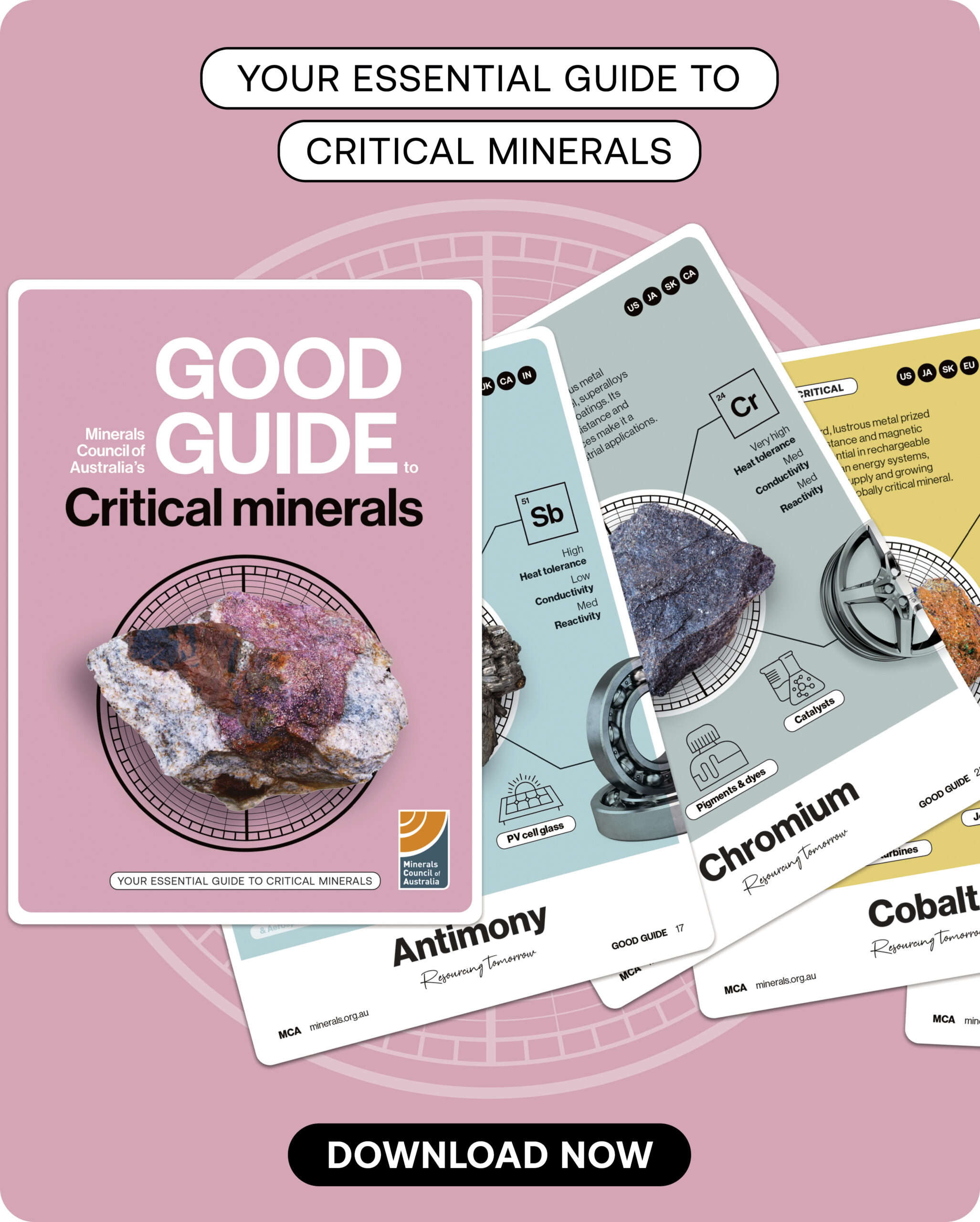
Good Guide to Critical Minerals

Read now

Other Policies

See all policies
Economic Policy

Australian mining is a nation builder and global leader. It is Australia’s largest exporter, company tax payer and investor in infrastructure.

Learn more
Workforce, innovation and skills

A highly skilled and technologically advanced future workforce will be required for the specialist mining occupations coming online.

Learn more
Trade and Investment

Trade, investment and economic co-operation maximise opportunities for Australia’s mining and minerals processing industry to boost national income, generate government revenue and create high value jobs.

Learn more
Safety and health

The safety, health and psychological wellbeing of the mining workforce is the industry’s number one value and commitment.

Learn more
Energy and climate change

To achieve net zero emissions, Australia requires a stable policy framework enabling all low emissions technologies to participate in competitive decarbonisation of the economy.

Learn more
 Workplace relations

Australia needs a modern and adaptable workplace system that attracts investment, drives sustainable wage growth and contributes to national prosperity.

Learn more
Sustainability

The Australian minerals industry is committed to responsible mining through continual improvement of environmental stewardship and social performance and by contributing to sustainable development.

Learn more

Sign up for updates

Sign up for news, policies, updates and new publications.

This field is for validation purposes and should be left unchanged.

  • MCA
    02 6233 0600 info@minerals.org.au
  • MCA NT
    08 8981 4486 info.nt@minerals.org.au
  • MCA Victoria
    03 8614 1851 info.vic@minerals.org.au
  • Media
    0439 300 335 simon.troeth@minerals.org.au
  • About
  • Our Members
  • Policy & Advocacy
  • Latest News
  • Careers
  • Contact us
Keep in touch

© 2026 Minerals Council of Australia

  • Privacy Policy
  • Terms of use
  • Sitemap