What's New



Australia has the world's second-largest economic resources of copper, accounting for around 11 per cent of the global total.

Copper is essential for electricity networks, housing, transport, electronics, renewable energy, data centres and artificial intelligence.
Australia has around 108 million tonnes of economic demonstrated copper resources, with South Australia holding around two-thirds of the national total.
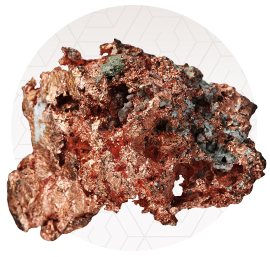
Copper is a highly conductive, durable and versatile metal that has played an important role in human civilisation for thousands of years.
Today it is more important than ever.
Its exceptional electrical and thermal conductivity makes copper indispensable to electricity generation and transmission, electronics, buildings, transport, telecommunications and industrial machinery.
Its uses are expanding as economies electrify and investment grows in electricity grids, data centres, artificial intelligence and new energy technologies.
The Australian Government classifies copper as a strategic material, reflecting its importance to the energy transition, defence capabilities and advanced technologies.
Australia’s copper edge
Australia has a substantial natural advantage in copper.
The nation has around 108 million tonnes of economic demonstrated copper resources, ranking second globally with around 11 per cent of the world’s economic resources.
South Australia is at the heart of this opportunity, holding around two-thirds of Australia’s copper resources.
Major deposits and operations include Olympic Dam, Carrapateena, Prominent Hill and Oak Dam. Australia also has important copper resources and operations across Queensland, New South Wales, Western Australia and Tasmania.
Australia is not only a miner of copper; Australian operations also process and refine copper for domestic and international markets.
Copper is not only the metal used in electrical wiring.
Copper is used in homes, commercial buildings and critical infrastructure, electric vehicles, renewable energy, plumbing, electronics, industrial equipment and telecommunications.
It is also increasingly important to the infrastructure required to support data centres and artificial intelligence.
As more of the global economy becomes electrified, copper’s combination of conductivity, reliability and versatility makes secure supplies increasingly important.
Copper is highly recyclable and can be repeatedly recycled without losing its essential properties.
Recycling provides an important secondary supply of copper, reduces waste and contributes to a more circular economy.
But recycling does not remove the need for mining.
Much of the copper already produced remains locked into long-life assets including buildings, electricity networks, machinery and infrastructure.
At the same time, demand for copper is increasing as the global economy expands and electrifies.
Meeting future requirements will therefore require both greater recycling of existing copper and new mine supply.
The world will need more copper, and Australia has the ability and the opportunity to supply it.
Australia has the resources, mining expertise and established international relationships to play a larger role in meeting the world’s growing copper needs.
Growing demand and the long lead times required to discover, approve and develop new mines are increasing the strategic importance of securing future copper supply.
Turning Australia’s resource endowment into new production will require continued exploration and investment, efficient and predictable approvals, competitive energy prices, productive workplaces and infrastructure capable of supporting new mines and processing.
The opportunity is to turn our geological advantage into investment, jobs, exports and greater security of supply for Australia and its strategic partners.